






Introduction: The Spiritual Significance of Food in Japanese Culture
In Japan, food is not only an essential part of daily life but also plays a crucial role in spiritual and cultural practices. One of the most significant festivals that highlight the connection between food and the ancestral spirits is the Obon Festival (お盆). This annual celebration, which typically takes place in mid-August, is a time when Japanese people honor and welcome the spirits of their deceased ancestors back to the earthly realm. The rituals surrounding Obon emphasize a deep reverence for the deceased, and food plays an integral role in these traditions.
The act of preparing and offering food to ancestors during Obon is a spiritual gesture, symbolizing love, respect, and the desire to nourish the spirits of the departed. Through these offerings, families not only show gratitude for their ancestors’ guidance and protection but also reinforce family bonds and continuity across generations. In this article, we will explore the intricate relationship between food and ancestral worship in Japan, with a focus on the foods prepared and offered during Obon and other related festivals.
1. The Obon Festival: A Time for Spiritual Reflection and Reunion
1.1 The Origins of Obon: A Celebration of Life and Death
The Obon Festival traces its origins to the Buddhist tradition, particularly the story of Mokuren, a disciple of the Buddha who sought to rescue his mother from the realm of hungry spirits. According to the tale, Mokuren used food offerings to relieve the suffering of his mother, who had become a hungry ghost. Moved by his devotion, the Buddha instructed Mokuren to perform ritual offerings to honor all ancestors, thereby alleviating their suffering and bringing peace to their spirits.
Obon is a time of reflection, where Japanese families honor not just their ancestors but also the concept of impermanence and the transient nature of life. It is a time when the spirits of the deceased are believed to return to visit their families, guiding and protecting them in the process.
1.2 Obon Practices: Lighting the Lanterns and Preparing the Altar
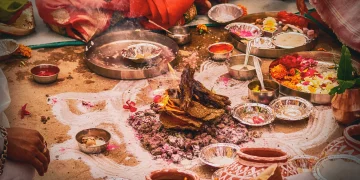
The preparation for Obon begins with the setting up of altars (お盆の祭壇), where families display portraits of deceased relatives, incense, and offerings of food. The first night of Obon is marked by the lighting of lanterns to guide the spirits of ancestors back to the home, while the final night involves the lighting of fire or lanterns (called “Toro Nagashi”) to send the spirits back to their resting places. The entire festival is steeped in the belief that the soul’s journey is made easier and more comfortable with the offerings of food and light.
2. The Role of Food in Obon: Nourishing the Spirit
2.1 The Importance of Offerings: Symbolic Foods for the Deceased
Food offerings during Obon are deeply symbolic. The belief is that food not only sustains the body but also nourishes the soul. Offerings are typically placed on an altar in the home or at the family tombstone, and they may include various types of food representing the deceased’s favorite dishes or seasonal delicacies. The offerings serve as a bridge between the living and the dead, allowing for a symbolic communion between family members and their ancestors.
The foods presented to the spirits are carefully chosen to reflect both respect and gratitude for the guidance that the ancestors have provided. It is believed that these offerings provide comfort to the spirits, ensuring that they are well-nourished and at peace during their brief return to the earthly realm.
2.2 Traditional Foods Offered During Obon
The foods offered during Obon are varied and diverse, depending on the region, family traditions, and the available seasonal ingredients. However, there are several key dishes that are universally associated with the festival. These foods have been passed down for generations and continue to play an important role in the spiritual life of the Japanese people.
2.2.1. Mochi (Rice Cakes)
One of the most common offerings during Obon is mochi, a type of rice cake made from glutinous rice that is pounded into a sticky, dough-like consistency. Mochi is often molded into various shapes, including circular shapes symbolizing the cycle of life and death. Mochi is significant in many cultures across East Asia and is particularly associated with new beginnings, prosperity, and the honoring of ancestors.
In Obon, mochi may be shaped into “temple offerings” to be placed on altars or may be served in ozoni, a ceremonial soup. The white color of mochi represents purity, while its soft texture symbolizes the spiritual nourishment provided to the souls of the deceased.
2.2.2. Seasonal Fruits and Vegetables
Seasonal fruits, such as melon, grapes, and peaches, are commonly offered during Obon. These fruits are chosen not only for their freshness and vibrancy but also because they are believed to embody the natural cycle of life. In addition, fruits like persimmons (柿, kaki) and pears are believed to represent prosperity and good fortune.
Vegetables such as eggplant and cucumbers are also common in Obon offerings. Interestingly, eggplants are sometimes carved into the shape of a horse, and cucumbers are carved into the shape of a cow. These symbolic animals are thought to serve as transportation for the spirits of the ancestors, guiding them back to their homes.
2.2.3. Pickles (Tsukemono)
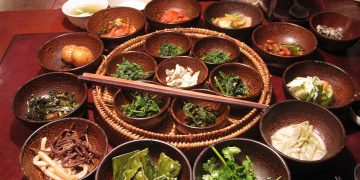
Pickled vegetables, known as tsukemono, are another essential part of the Obon offerings. Tsukemono is deeply ingrained in Japanese cuisine and is considered to have preserving and protective properties. The pickled vegetables, such as pickled radish (daikon), plum (ume), and cucumber, are believed to help preserve the spirits’ journey back and forth between the living world and the spiritual realm.
2.2.4. Sake and Green Tea
In some traditions, sake, the traditional Japanese rice wine, is offered as a way to honor the spirits of the deceased. The alcohol is believed to help the spirits feel at home, offering them warmth and comfort as they return to their families.
Additionally, green tea is often presented, symbolizing purity, calmness, and respect. As tea has been a significant part of Japanese culture for centuries, it serves as both a drink of hospitality and a token of reverence during Obon.
3. Preparing and Sharing Food: The Connection Between the Living and the Dead
3.1 The Ritual of Food Preparation: A Family Affair
The preparation of food for Obon is not just a matter of cooking; it is a ritualistic practice that brings families together. In many households, multiple generations work together to prepare the food offerings, and these moments of cooperation and remembrance deepen the sense of connection among family members. Elders may share stories of ancestors, recounting family history and passing down cultural practices to younger generations.
The act of preparing and sharing food during Obon represents the continuity of life, ensuring that the bonds between the living and the deceased remain unbroken. It is a reminder that although family members may no longer be physically present, their spirits continue to guide and protect those who remain.
3.2 Food as a Symbol of Ancestral Presence
For many Japanese people, the food offerings are a way to feel the presence of their ancestors. During Obon, families may gather around the altar to pray and make offerings, believing that the spirits of the departed are watching over them and sharing in the meal. This spiritual communion reinforces the belief that death is not the end, but a transition to another realm where the spirits continue to influence the lives of their descendants.
4. Obon Beyond the Food: The Broader Cultural Context
4.1 Community Celebrations: Lanterns, Bon Dance, and Ceremonies
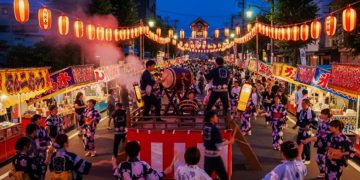
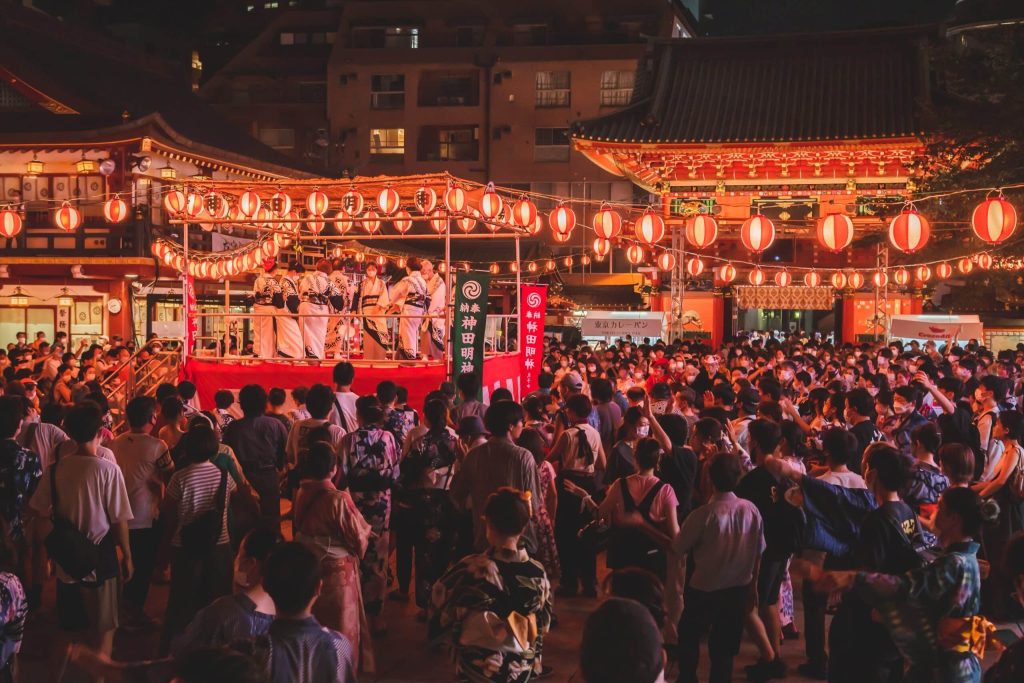
While food plays a central role in the private rituals of Obon, the festival is also marked by public celebrations that bring entire communities together. One of the most famous aspects of Obon is the Bon Odori (盆踊り), a traditional folk dance performed to welcome and honor the spirits of the ancestors. The dance is often accompanied by a lively procession and communal feasts, where people gather to share food, music, and fellowship.
In many parts of Japan, communities host Obon processions, where lanterns are lit and carried through the streets to guide the ancestors back to their resting places. The Toro Nagashi (灯籠流し), or the floating of lanterns on rivers, is another popular Obon tradition that symbolizes the spirits’ journey to the afterlife.
4.2 The Evolution of Obon: Adapting to Modern Times
While Obon remains deeply rooted in tradition, it has also evolved to adapt to modern times. In urban areas, many families may not have access to the ancestral home or family tomb, but they still continue to honor their ancestors by visiting temples or participating in community celebrations. Technology has also played a role, with many families using virtual altars or connecting with relatives via video calls to observe the festival.
In the contemporary era, Obon has become not only a religious and cultural observance but also a celebration of family unity, life, and remembrance, transcending time and place.
Conclusion: The Lasting Legacy of Obon and Food as a Bridge to the Spirit World
In Japanese culture, food is much more than sustenance; it is a medium of communication, a form of reverence, and a tool for spiritual connection. Through the preparation and offering of traditional dishes during the Obon Festival, the Japanese people demonstrate their deep respect for their ancestors and their ongoing relationship with the spiritual world.
Food, in this context, becomes a symbol of continuity and a tangible expression of the enduring bond between the living and the dead. The rituals surrounding Obon not only honor the past but also encourage future generations to reflect on the importance of family, cultural traditions, and the responsibilities they hold in maintaining those connections.
As we consider the role of food in rituals such as Obon, we are reminded of the power that a simple meal holds—not only to nourish the body but also to sustain the spirit, ensuring that the legacies of our ancestors remain alive in our hearts and in our kitchens for generations to come.